Social Media Security Guide — Facebook, Instagram, Snapchat & More
A practical, platform-by-platform guide to tightening account security, reducing unnecessary data collection, recovering access safely, and protecting private files beyond the apps themselves.

The strongest social media setup combines a unique password, multifactor authentication, recovery information you still control, limited profile visibility, and routine review of app permissions. Platform settings reduce exposure, while encrypted local storage protects sensitive exports, identity documents, and recovery codes that should not remain inside social apps.
In this guide
Privacy is control. Security is protection.
Social media privacy decides who can see, collect, and reuse information about you. Social media security prevents someone else from taking control of the account or the data connected to it. You need both.
What is a Social Media Security & Privacy Hub?
It is the combined practice of securing account access, limiting public visibility, controlling data collection, checking connected apps, preserving safe recovery options, and protecting exported or downloaded account data.
This guide is a reference hub, not a separate security service. It explains the settings and tools that matter, where to find them, and how to choose a sensible protection level.
Direct answers to common searches
Facebook Social Media Data Security Online
Start with Security Checkup, enable multifactor authentication, review logged-in devices, and use Privacy Checkup to restrict profile and post visibility.
See the Facebook checklist →Facebook Social Media Data Security
Facebook security protects account access. Facebook privacy controls who can see posts and how Meta uses or shares certain activity and advertising data.
Review security and privacy →Instagram Social Media Data Security
Use a private account when appropriate, review login activity, turn on multifactor authentication, and verify suspicious messages through Instagram’s official-email list.
Secure Instagram →What are you trying to do?
Platform coverage: Windows, Mac, Android and iOS
Account controls follow the social platform, while local privacy tools depend on the device. Use the platform settings first, then choose file or app protection that actually exists on your operating system.
| Protection need | Windows | macOS | Android | iPhone and iPad |
|---|---|---|---|---|
| Secure the social account | Browser or official app | Browser or official app | Official app | Official app |
| Encrypt downloaded exports and private files | Folder Lock lockers or native drive encryption | Folder Lock for macOS 13+ or native encrypted storage | Folder Lock media and document vaults | Folder Lock media and document vaults |
| Add a lock in front of another app | Not the main use case | Not the main use case | Folder Lock includes app-level locking | Use iOS access controls where available; do not assume Android-style app locking |
| Control whether files can be viewed, changed, or deleted | Folder Protect offers granular Windows access rules | Use macOS permissions or encryption | Use app vault controls | Use app vault controls |
| Use a phishing-resistant login key | FIDO2 USB or NFC key | FIDO2 USB or NFC key | FIDO2 USB-C or NFC key | Supported FIDO2 or passkey method |
Windows has the broadest Folder Lock toolset
Windows users can create encrypted local or cloud-linked lockers, protect selected folders from ordinary access, prepare portable encrypted containers, remove redundant files securely, and clear selected local activity traces. Folder Protect is a separate Windows product for controlling visibility, access, editing, and deletion without treating every use case as an encryption problem.
Best fit: people who manage full account archives, evidence folders, recovery documents, or several categories of sensitive desktop data.
Folder Lock for Mac focuses on lockers, sharing, sync, and secrets
The Mac edition supports macOS 13 and later. It can protect local files, place encrypted data in supported cloud-linked lockers, synchronize across linked devices, share protected material with authorized users, and store structured private records. The Windows-only Safeguard collection is not included in the Mac release.
Best fit: Apple users who want an organized encrypted workspace and cross-device access, not Windows-specific cleanup or folder-locking utilities.
Android combines a private vault with app locking
The Android app can hold photos, videos, documents, audio, notes, passwords, and wallet-style records. It also supports encrypted backup, records unsuccessful access attempts, includes private browsing, and can place an additional lock in front of selected apps.
Best fit: people whose main risk is someone opening social apps or private media on an unlocked or shared phone.
iPhone and iPad emphasize protected content and transfer
The iOS app protects selected media, documents, audio, notes, passwords, and wallet-style records. It supports encrypted cloud backup, records failed access attempts, provides a privacy-oriented browser, and can transfer files over the local Wi-Fi network between an Apple mobile device and a computer.
Best fit: users who need a private content vault. Treat system-wide app locking as an operating-system question rather than assuming the Android feature exists on iOS.
Privacy Settings on Social Media
Use the native platform controls first. Add dedicated file protection when you keep private exports or recovery material. Add mobile app locking when another person may use your unlocked phone.
Method 1: Native platform and operating-system controls
Every major social platform includes account security, session review, visibility controls, blocked-account tools, data-download settings, and ad-preference controls. Your operating system adds a screen lock, update controls, browser permissions, and encrypted device storage.
- Change reused passwords and save each account in a reputable password manager.
- Enable multifactor authentication, preferably with an authenticator app, passkey, or hardware security key.
- Review active sessions and sign out devices you no longer recognize or use.
- Limit profile, story, location, contact-sync, and discovery settings to what you actually need.
- Remove old games, quizzes, browser extensions, and third-party apps connected to the account.
- No extra software
- Direct control over the account
- Available on every supported device
- Does not encrypt downloaded files
- Settings can move after app updates
- Cannot stop every form of profiling
Method 2: Dedicated encryption and private-file software
A dedicated vault is useful when you download social account archives, save identity documents for verification, retain private media, or store recovery codes. It protects files after they leave the platform, which social privacy settings cannot do.
- Create one encrypted locker for account exports and one for recovery material.
- Move only the files you genuinely need into those lockers.
- Use a strong master password that is not shared with any social account.
- Keep a separate encrypted backup and test that you can restore it.
- Encrypts sensitive files outside social apps
- Useful for local and cloud-stored archives
- Separates recovery material from the account
- Does not change Facebook or Instagram privacy settings
- Master-password loss can be serious
- Requires routine backups
Method 3: Mobile app locking and private media vaults
App locking adds a second barrier after the phone is unlocked. It is useful on a shared family device or when you hand an unlocked phone to another person. A private media vault is better for photos and videos that should not remain in the social app or normal camera roll.
- Use a built-in app lock or secure folder when your phone provides one.
- Choose a separate PIN or biometric rule for social and financial apps.
- Confirm how the lock behaves after reboot, updates, and biometric failure.
- Keep recovery information outside the locked app so you do not create a circular lockout.
- Stops casual access on an unlocked phone
- Fast to set up
- Useful for private media
- Not a replacement for account security
- Behavior varies by phone
- Notifications can still reveal information
Facebook Security, Instagram Security and Snapchat Security
The names and locations of controls can change, but the security logic remains stable: protect sign-in, review sessions, restrict visibility, remove unnecessary integrations, and preserve owner-controlled recovery routes.
Facebook Security
- Run Security Checkup and review password, multifactor authentication, login alerts, and active sessions.
- Run Privacy Checkup for posts, profile information, audience controls, blocked accounts, and ad preferences.
- Remove old apps and websites that still have access.
- Check Pages and business assets for unfamiliar administrators.
- Treat unexpected “Facebook security alert” emails as suspicious until verified inside the app.
Instagram Security
- Turn on multifactor authentication and store backup codes safely.
- Review login activity and remove devices you do not recognize.
- Use a private account when public reach is not required.
- Review mentions, tags, messages, story sharing, location, and contact syncing.
- Use Instagram’s official-email view to verify whether a security message is genuine.
Snapchat Security
- Enable two-factor authentication and create a recovery code.
- Limit who can contact you, view your story, see your location, or find you through contacts.
- Review devices and connected apps after any suspicious login.
- Download account data before deleting information you may later need.
- Use My Eyes Only only after understanding its no-recovery tradeoff.
Snapchat My Eyes Only: the protection is intentionally unforgiving
My Eyes Only places selected Snaps behind a separate passcode. Snapchat states that it cannot recover forgotten passcodes or the content stored there. Resetting a forgotten passcode deletes the existing My Eyes Only content. Treat the passcode like an encryption key: record it securely before relying on the feature.
The initial privacy and security settings for most social media platforms are not a finished configuration
Default settings are designed to make sharing and discovery easy. They are not necessarily the settings that minimize collection or visibility. Review them immediately after creating an account, then again after major app updates or policy changes.
What social platforms can learn from normal use
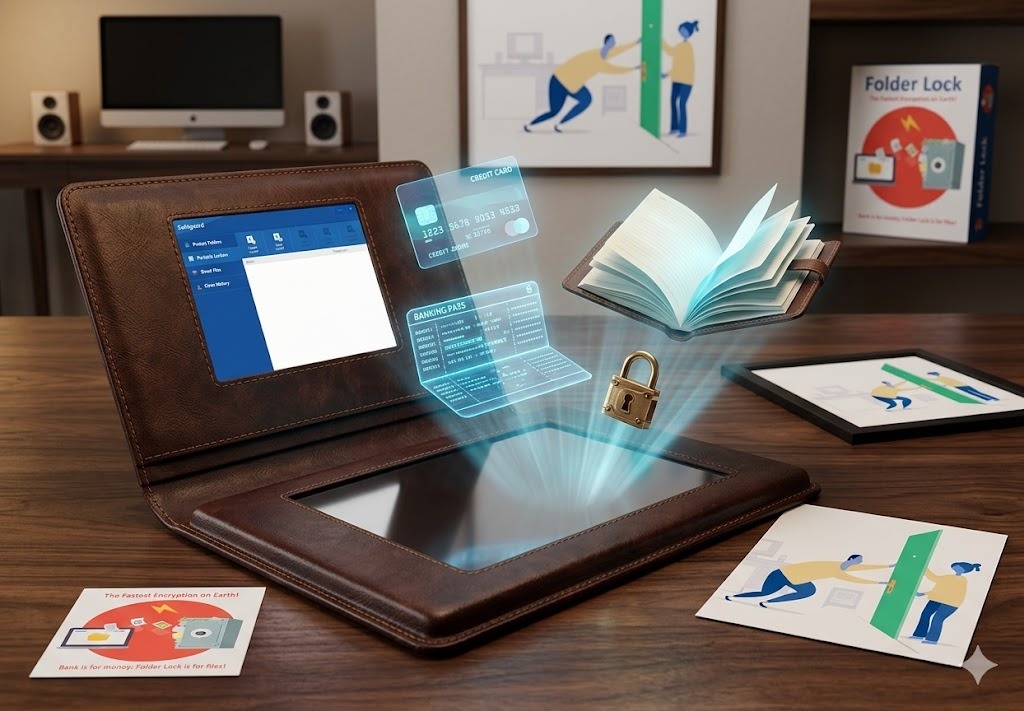
A platform may collect more than what you type into a profile. The full surface can include the device, network, contacts, behavior, purchases, location signals, interactions, and information inferred from those signals.
Identity and social graph
- Name and username
- Email and phone
- Contacts
- Followers and friends
- Groups and interests
- Profile history
Device and network
- Device model
- Operating system
- IP address
- Browser details
- Language
- Approximate location
Behavior and content
- Views and watch time
- Likes and saves
- Searches
- Message metadata
- Ad interactions
- Posting patterns
Commercial and inferred data
- Purchases
- Advertiser lists
- Likely interests
- Household links
- Risk or fraud signals
- Audience categories
How to Audit Your Social Media Security & Privacy Hub Setup

Work through the checklist in one sitting or save it for later. The counter updates automatically, and the download creates a plain-text copy you can keep offline.
Personal Data Risk Score Calculator
This is an educational score, not a forensic assessment. It highlights habits that tend to increase the impact of account takeover or a data breach.
How to check if your personal data has been leaked online
Start with breach-notification services that check an email address against known incidents, then review the security dashboards of your email provider and social platforms. A match means the data appeared in a reported breach, not necessarily that the account is currently controlled by someone else. Change exposed or reused passwords, revoke sessions, enable multifactor authentication, and watch financial accounts when payment or identity data was involved.
What should you protect first?
Choose the problem that is most urgent. The helper points you to a safe first action rather than a bypass or risky shortcut.
Are you currently locked out of an account?
Use the buttons to move through the decision path.
Your first safe step
Select an answer to receive a recommendation.
Timeline: how a social media data breach unfolds
The exact sequence varies, but account compromise often moves from a small access event to wider identity or financial harm. Use the controls to walk through the chain.
Access
A reused password, phishing page, stolen session, or malicious integration opens the door.
Discovery
The intruder reviews messages, contacts, saved details, Pages, and recovery routes.
Persistence
They add a device, change recovery information, create app access, or retain a session.
Abuse
Scams, impersonation, ad spending, extortion, or data resale begins.
Recovery
The owner documents evidence, uses official recovery, secures email, and warns contacts.
Free vs Paid Privacy Tools — Is It Worth Paying?
Free platform controls are essential and should never be skipped. Paid tools make sense when they solve a separate problem, such as encrypted file storage, password management across a household, identity monitoring, or easier data-broker removal.
Switch the comparison view
The better choice depends on what you need to protect.
Best for
Privacy settings, session review, app permissions, device updates, and basic breach checks.
Strength
Direct control at the platform and operating-system level.
Tradeoff
More manual work, fragmented dashboards, and limited protection for downloaded data.
Best for
Encrypted archives, family password sharing, identity monitoring, and repeated broker opt-outs.
Strength
Centralized workflows and protection that continues after files leave a platform.
Tradeoff
Subscription or license cost, another account to secure, and possible vendor lock-in.
| Method | Difficulty | Security | Cost | Best for | Limitations |
|---|---|---|---|---|---|
| Native social settings | Easy | High for account controls | Free | Everyone | Does not protect exported files |
| Device screen lock | Easy | Strong against casual access | Free | Lost or shared devices | Does not stop remote account takeover |
| Password manager | Easy to moderate | High for credential hygiene | Free or paid | Unique passwords and passkeys | Master account must be secured |
| Hardware security key | Moderate | Very high for supported sign-ins | Paid hardware | Phishing resistance | Needs compatible accounts and backup key |
| Folder Lock | Moderate | High for local private files | Paid license | Exports, IDs, private media, recovery codes | Does not replace platform settings or MFA |
| Data-removal service | Easy | Reduces public broker exposure | Usually subscription | Repeated opt-outs | Cannot erase every source or prevent recollection |
| Verdict: start with free native controls. Pay only for a separate need that those controls cannot solve. | |||||
How Data Brokers Collect and Sell Your Personal Data

Data brokers assemble profiles from public records, commercial transactions, app and website activity, advertising identifiers, surveys, loyalty programs, and information obtained from other data suppliers. They may sell access to lists, identity attributes, audience segments, contact details, or risk signals rather than selling one neat “file” about you.
Social media can contribute directly through information you publish and indirectly through tracking, contact uploads, embedded pixels, inferred interests, and advertiser-supplied customer lists. Removing a post helps, but it does not automatically remove copies, screenshots, partner records, or previously derived categories.
Opting out of data collection: a practical sequence
- Download a copy of your data before deleting anything important.
- Turn off unnecessary contact syncing, precise location, and cross-app tracking.
- Review advertising and off-platform activity controls inside each social account.
- Search major people-search and data-broker sites for your name, email, phone, and prior addresses.
- Use each broker’s opt-out form and record the date, confirmation, and follow-up requirement.
- Repeat the search periodically because records can reappear or be rebuilt from new sources.
Data minimization is more reliable than cleanup
The safest record is often the one that was never collected. Avoid optional profile fields, remove stale accounts, do not upload an address book without a clear need, and delete account exports after storing only the items you truly need.
GDPR and CCPA — Your Rights Explained Simply
Privacy laws do not make all tracking disappear, but they can give eligible people enforceable ways to ask what is held, correct it, delete it, limit some uses, or opt out of certain sharing and sales.
GDPR rights
Depending on the circumstances, people in the European Economic Area can request access, correction, erasure, restriction, portability, and information about processing. They can object to certain processing and withdraw consent where consent is the legal basis.
Organizations may have lawful reasons to retain some records, and rights are not absolute in every case.
European Commission overviewCalifornia CCPA and CPRA rights
California residents can have rights to know, delete, correct, and opt out of the sale or sharing of personal information, along with limits on certain uses of sensitive personal information and protection against discrimination for exercising rights.
Coverage and exceptions depend on the business, the data, and the request.
California Attorney General guideHow to exercise a privacy right
- Identify the legal entity responsible for the account or service.
- Use its privacy center, “Your Privacy Choices,” or data-subject request form.
- Ask for a specific outcome: access, correction, deletion, portability, or opt-out.
- Complete identity verification using the least information reasonably required.
- Save the request confirmation and response deadline.
- Escalate to the relevant regulator when a covered request is improperly ignored or denied.
Free Tools for Social Media Security & Privacy Hub

A strong setup can be built mostly with free tools. Choose tools by function rather than installing a large collection that adds new accounts, permissions, and attack surface.
Password manager
Creates and stores unique passwords, recovery codes, and passkeys. Protect the manager with multifactor authentication and an offline recovery plan.
Best for: stopping password reuse.
Authenticator app
Generates time-based codes without relying on text messages. Export or back up tokens only through a secure, documented process.
Best for: stronger everyday multifactor authentication.
Privacy-focused browser
Reduces tracking with stronger default cookie controls, site isolation, permission management, and anti-fingerprinting features.
Best for: limiting routine web tracking.
Privacy-focused search
Separates search behavior from a broader advertising profile. It does not make you anonymous to the network, browser, or websites you visit.
Best for: reducing search-based profiling.
Breach notification service
Checks identifiers such as email addresses against known breach data and sends alerts when new incidents are published.
Best for: knowing when credential changes are urgent.
Built-in device security
Automatic updates, encrypted device storage, screen locks, app permissions, and remote-find tools cover many risks without another subscription.
Best for: protecting the device that holds social sessions.
Does using a VPN fully protect privacy?
No. A VPN can hide network traffic from the local Wi-Fi operator and replace the public IP address seen by websites, but logged-in platforms still know which account is active. Cookies, browser fingerprints, contact uploads, content, payment details, and account behavior can still identify or profile you.
Which privacy tool solves your actual problem?
Building a Personal Data Security Plan
- Inventory. List social accounts, recovery email addresses, phone numbers, devices, browser profiles, and third-party connections.
- Secure identities. Protect email first, then social accounts, with unique passwords and phishing-resistant multifactor authentication where available.
- Minimize collection. Remove optional data, disable unnecessary permissions, and stop contact or location sharing that does not serve a clear purpose.
- Protect retained files. Encrypt account archives, identity documents, private media, and recovery material. Keep a tested backup.
- Review on a schedule. Check sessions monthly, privacy settings quarterly, and account inventories annually or after any security incident.
The difference between privacy, security, and anonymity
Privacy is control over collection, use, and disclosure. Security is protection against unauthorized access, alteration, loss, or abuse. Anonymity is the absence or effective concealment of identifying links. A person can have a secure account that is not private, or a private conversation that is not anonymous.
Privacy habits that actually make a difference
Protect email before social accounts, remove password reuse, use multifactor authentication, install updates, review sessions, avoid public recovery clues, and reduce the amount of data retained. These habits are more dependable than constantly changing usernames, installing many “privacy” extensions, or trusting a single VPN to solve every problem.
Use a Regular USB as a Security Key?

A normal flash drive and a hardware security key may both plug into USB, but they are different devices with different security properties.
A normal USB flash drive stores files. It does not automatically contain the secure hardware, FIDO2/WebAuthn protocol support, protected cryptographic keys, and user-presence controls required for modern account authentication.
Answer: you generally cannot turn any ordinary USB drive into a genuine FIDO2 security key simply by copying software onto it. Use a purpose-built, compatible security key for Facebook, Google, Microsoft, or other supported accounts.
Can any USB be used as a security key?
No. The account service must support the authentication standard, and the device must be built and certified to perform the cryptographic operation.
Insert your security key into the USB port
This prompt means the service is waiting for a registered hardware key. Insert it, touch or unlock it when required, then follow the on-screen verification.
Create a USB security key on Windows 11
Register a compatible FIDO2 key in the account’s security settings. Windows can manage the key’s PIN and reset options, but a regular storage drive is not converted into one.
Never format or reset an authentication key casually
Before changing a key, add a second sign-in method or backup key and confirm you can access the account. Resetting a security key removes credentials stored on that key and can cause lockout when no backup route exists.
Secure the account at the source, then protect the private data you keep.
Facebook, Instagram, Snapchat, and your email provider must handle sign-in protection, session control, and account recovery. Folder Lock becomes relevant after you download an archive, save identity evidence, export private media, or keep recovery material on a computer or phone.
We recommend it for people who want one organized system for encrypted files across Windows, macOS, Android, and iOS. Windows offers the fullest desktop feature set. Mac users get the locker, cloud, sharing, synchronization, and private-record features but not the Windows Safeguard module. Android adds app locking, while the iPhone and iPad edition focuses on protected content and Wi-Fi transfer.
It is not a breach detector, a social privacy dashboard, a password-reset service, or a substitute for multifactor authentication. It protects retained information. That narrower job is where it is useful.
Folder Lock is developed by NewSoftwares.net.
Social Account Archive
Organized protected records
Folder Lock features that matter for social media privacy
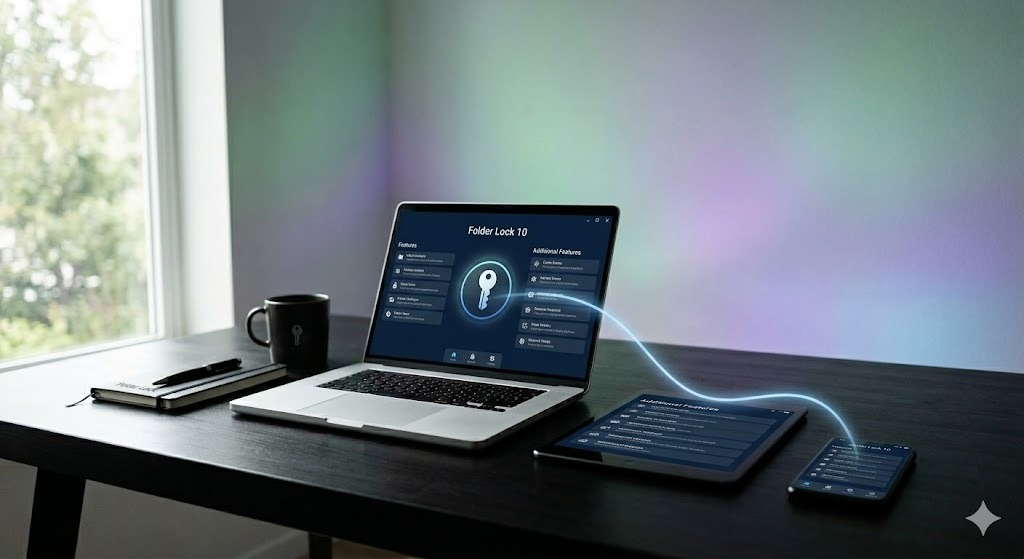
The useful features are the ones that protect data after it leaves a social platform. The list below separates the practical benefits from functions that belong to Facebook, Instagram, Snapchat, your email account, or the operating system.
Encrypted working spaces
Keep complete account archives, private message exports, identification records, and selected media inside an encrypted container instead of an ordinary downloads folder.
Best for: sensitive files that must remain readable and organized over time.
Local and cloud-linked lockers
Choose a desktop locker for information that should stay local, or use supported cloud-linked lockers when encrypted files must follow you across approved devices.
Best for: balancing offline control with access on more than one device.
Cross-device continuity
The product family includes Windows, Mac, Android, and iOS applications. Shared workflows are useful, but the exact controls are not identical on every platform.
Best for: households or professionals who move between a computer and a phone.
Notes, passwords, and structured records
Private notes and record templates provide a cleaner home for account inventories, recovery instructions, and other sensitive details than unprotected screenshots or loose text files.
Best for: information that needs labels and categories, not just a folder.
Controlled sharing
Protected folders can be made available to approved participants without treating a single shared password as the only control. Both parties should test access before removing any original copy.
Best for: transferring evidence or records to a trusted collaborator.
Platform-specific mobile privacy
Android adds app locking alongside its private-file vault. The Apple mobile edition instead highlights protected content, failed-access records, private browsing, backup, and local Wi-Fi transfer.
Best for: choosing features by device rather than assuming mobile apps are identical.
Extra Windows safeguards
The Windows edition includes tools for folder protection, portable encrypted containers, secure removal of redundant data, and cleanup of selected local traces. These functions are not the same as account privacy settings.
Best for: a desktop-centered privacy workflow with more than encryption alone.
Clear boundaries
Folder Lock cannot revoke a stolen session, recover a forgotten Snapchat private-area passcode, stop a phishing message, or remove a data-broker profile. Those tasks require official platform or privacy-rights processes.
Use instead: account recovery, multifactor authentication, and data-removal requests.
How to protect social media exports using Folder Lock

Interface labels vary by operating system. The safe workflow remains consistent: obtain the data from the official platform, reduce what you keep, place the retained records in protected storage, verify recovery, and only then remove exposed duplicates.
Request the archive from the social platform
Use the account’s own download feature. Reject websites or browser extensions that ask for your social password in exchange for an export.
Review the archive on a trusted device
Confirm the file completed correctly and scan it with current security software. Note that exports can contain messages, contacts, locations, searches, and other information that is more sensitive than the public profile.
Decide what deserves long-term storage
Separate records needed for ownership, evidence, legal retention, or personal archives from duplicates and low-value tracking data. Keeping less reduces the impact of a future device compromise.
Choose the right protected location
Use a local locker when the data should remain on one computer. Use a supported cloud-linked locker only when synchronization is necessary. On mobile, import selected media or documents into the app’s protected area rather than treating the entire phone as an archive.
Create a unique access secret
Do not reuse the social account password. Store the locker password or recovery plan in a separate, reputable password manager or another protected offline location.
Organize, close, and reopen the protected data
Use separate folders for account exports, ownership evidence, recovery records, and private media. Close the protected area, reopen it, and test representative files before assuming the migration worked.
Back up before removing plaintext copies
Create a second protected copy on a different device or storage location. Verify that copy independently. Only then remove unnecessary unencrypted versions, and use permanent deletion carefully when the file is no longer required.
How file protection fits into a social media security plan
Folder Lock compared with other file-protection methods
No option wins every category. Match the method to the device, sensitivity, need for sharing, and your ability to maintain passwords and backups.
| Option | Main control | Platforms | Social-archive fit | Important limitation |
|---|---|---|---|---|
| Folder Lock 10 | Encrypted lockers, protected records, sync and sharing | Windows, macOS 13+, Android, iOS | Strong when you want one organized product family | Features differ by operating system; it does not secure the social account itself |
| Folder Protect | Windows rules for viewing, opening, editing, and deletion | Windows | Useful for shared working folders | Access control is not a replacement for encrypting highly sensitive exports |
| Folder Lock Lite | Basic folder locking in an older Windows line | Windows | Limited | The supplied Lite description excludes encrypted lockers |
| Native encrypted storage | Operating-system encryption | Platform-specific | Strong for technical users | Sharing and cross-platform access can be less convenient |
| Modern encrypted archive | Password-protected portable package | Broad, reader-dependent | Good for records that rarely change | Password loss and incompatible archive tools can block access |
| Ordinary cloud folder | Provider account controls | Broad | Convenient, but incomplete alone | A compromised cloud account may expose readable files |
| Choose Folder Lock when a guided, multi-device private-storage workflow matters. Choose native encryption when you already understand the platform and do not need the product’s record, sharing, or companion-app features. Add Folder Protect only when Windows access rules solve a separate operational need. | ||||
Folder Lock pricing: what you get
The supplied research shows a free option and a Pro price of $39.95. It does not state the billing period consistently enough for this guide to label that amount as monthly, yearly, or lifetime. Verify the checkout total, renewal terms, taxes, and platform entitlement before paying.
A practical compatibility test before moving important data.
Paid capabilities vary by platform.
A separate Windows access-control product.
When does the paid edition make sense?
Paying is easier to justify when the free capacity is too small, more than two devices must stay synchronized, protected sharing is required, or you need the Windows-only advanced tools. The free tier may be enough to test a small archive. A native encrypted volume may be the better no-cost answer for users who already manage encryption and backups confidently.
Safe troubleshooting for social media security problems
Use owner verification, official recovery, and tested backups. Avoid bypass utilities, credential dumps, cracked applications, and services that promise access to locked content. They can destroy the only copy or steal the account you are trying to recover.
Facebook security alert looks suspicious
Do not use the message link. Open Facebook through a saved bookmark or the official app, inspect recent sessions and notifications, then change the password and revoke access if the activity is real.
Instagram shows an unfamiliar login
End that session, secure the connected email account, replace any reused password, enable a stronger second factor, and remove unknown linked services.
Forgot your Snapchat My Eyes Only passcode
Use Snapchat’s documented reset process and understand its data-loss warning. A third party cannot legitimately recover the existing protected content by bypassing the passcode.
Multifactor codes are not arriving
Check device time, network service, spam filtering, authenticator synchronization, and saved backup codes. Try a previously trusted device or the platform’s official recovery route.
A hardware security key is not recognized
Confirm it is a real FIDO-compatible key, use a supported port or NFC method, update the browser and operating system, and test a registered backup sign-in method before resetting anything.
A social archive will not open
Confirm the download completed and follow the platform’s archive instructions. Do not upload the file to an unknown repair site because it may contain private messages, contacts, location history, and identity data.
You lost a Folder Lock locker password
Stop before modifying the locker or running recovery software. Check the current product documentation, your password manager, saved registration details, and official support options. Older product material warns that some locker passwords cannot be recovered, so preserve the original files and any backup intact.
A Windows feature is missing on Mac
Confirm the operating system and edition. The Mac release does not include the Windows Safeguard module. Use the Mac locker, cloud, sharing, synchronization, and private-record tools that are actually supported.
App locking is missing on iPhone or iPad
Do not assume the Android feature exists on iOS. Use Apple’s current device and app access controls, then use Folder Lock for protected files, records, backups, and supported transfer functions.
Files disappeared after importing them into a mobile vault
Check the app’s protected folders, recent imports, cloud synchronization status, and device permissions before deleting or reinstalling anything. Verify another protected copy exists before removing the app or clearing its data.
How different people put the plan into practice
These are illustrative composites, not customer endorsements. They show how the same guidance changes with risk and workflow.
“I secured email first, replaced reused passwords, then made Facebook private enough for family sharing without hiding my public business Page.”Composite scenario: local business owner
“I stopped saving recovery codes as screenshots. They now live in an encrypted locker with an offline backup.”Composite scenario: university student
“The biggest improvement was removing old quiz apps and contact syncing I had forgotten about.”Composite scenario: long-time social media user
“We added hardware security keys to the accounts that control ads and Pages, with a second key stored separately.”Composite scenario: small marketing team
Which method or tool is right for you?
You only want safer social accounts
Choose: native security settings, unique passwords, and multifactor authentication.
Folder Lock fit: low unless you retain sensitive exports or documents.
You manage Pages, ads, or a public brand
Choose: hardware security keys, role review, separate business access, and incident documentation.
Folder Lock fit: useful for encrypted business records and evidence files.
You share an unlocked phone
Choose: device screen lock, notification privacy, built-in app lock or secure folder, and a private-media vault.
Folder Lock fit: mobile companion app may help, but test recovery and backup behavior.
You keep account archives and private media
Choose: encrypted local storage with a tested encrypted backup and a retention schedule.
Folder Lock fit: strong for users who want a guided Windows locker workflow.
Frequently asked questions
Filter by category or search for a platform, setting, recovery issue, or security-key question.
Basics
What is Social Media Security & Privacy Hub?
It is a practical reference for securing account access, limiting data collection and visibility, reviewing connected apps, managing recovery, and protecting private files associated with social accounts.
What is the difference between data privacy and data security?
Privacy concerns who may collect, use, and share data. Security concerns how data and accounts are protected against unauthorized access, loss, alteration, and abuse.
Facebook, Instagram and Snapchat
How do I protect my privacy when using social media and apps?
Use unique passwords and multifactor authentication, restrict profile visibility, review location and contact permissions, remove stale integrations, limit advertising activity controls, and avoid publishing recovery clues such as birth dates, phone numbers, and family relationships.
How does Facebook Social Media Data Security Online relate to this guide?
It describes the Facebook-specific part of the wider plan: Security Checkup, Privacy Checkup, active-session review, multifactor authentication, official alert verification, app permissions, and Page-role security.
What are the initial privacy and security settings for most social media platforms?
Defaults generally prioritize sharing, discovery, and low-friction onboarding. Review audience controls, search and contact discovery, location, tagging, messaging, advertising, connected apps, and data-download settings instead of treating defaults as a privacy recommendation.
Is Snapchat My Eyes Only safe?
It provides a separate passcode barrier for selected Snaps, but the tradeoff is strict: Snapchat says it cannot recover a forgotten passcode or the existing content. Resetting the passcode deletes that content.
Data privacy
How can I check if my data has been leaked?
Use reputable breach-notification services, review email and social security dashboards, and check unusual login or financial activity. A breach match should trigger password changes, session revocation, and multifactor authentication, especially when a password was reused.
Are free privacy tools trustworthy?
Some are excellent, especially official platform controls, open-source tools with clear governance, and established browser protections. Evaluate the developer, business model, permissions, update history, privacy policy, independent audits, and what happens to your data.
How do companies collect personal data without my knowledge?
Collection can occur through embedded trackers, advertising identifiers, data brokers, contact uploads, purchase records, public records, device signals, and inferences from behavior. “Without knowledge” often means the disclosure was difficult to notice rather than completely undisclosed.
Does using a VPN fully protect my privacy?
No. It changes the network path and visible IP address, but logged-in services, cookies, fingerprints, account activity, content, and device permissions can still identify or profile you.
What personal data should I never share online?
Avoid publishing authentication codes, recovery codes, full identity numbers, payment credentials, private keys, precise home routines, or documents that expose multiple identity attributes. Share verification documents only through the official process that requested them.
USB security keys
What is a USB security key?
It is purpose-built authentication hardware that performs cryptographic sign-in through standards such as FIDO2 and WebAuthn. It may connect through USB, NFC, or another supported interface.
Can I use a regular USB as a security key?
Not as a genuine FIDO2 security key. A normal flash drive stores files but lacks the protected hardware and protocol implementation required for phishing-resistant authentication.
How do I create a USB security key on Windows 11?
Purchase a compatible hardware key, register it in the target account’s security settings, and use Windows settings where applicable to manage its PIN. Keep a second registered key or another secure recovery method.
What does “insert your security key into the USB port” mean?
The service is waiting for a previously registered hardware key. Insert the correct key, touch or unlock it when prompted, and complete verification. Do not insert an unknown USB device sent by an unsolicited caller or email sender.
Recovery and protection
What should I do after a data breach affects me?
Secure email first, change exposed and reused passwords, revoke sessions, enable multifactor authentication, preserve evidence, contact financial providers when relevant, monitor identity misuse, and notify contacts if your account sent scams.
What is the most important thing to do to protect my data?
Remove password reuse, especially between social accounts and email. Then add multifactor authentication and reduce the amount of sensitive data retained or publicly exposed.
How can risks to privacy be minimized while collecting personal data?
Collect only what is necessary for a defined purpose, explain the purpose clearly, limit access, use secure retention periods, avoid secondary uses without a valid basis, and delete or anonymize data when it is no longer needed.
In-depth answers and official resources
Changes in social media privacy policies over time
Policies have expanded as platforms added advertising networks, location features, biometric or face-related systems, marketplace activity, payments, artificial-intelligence features, and cross-service account centers. Compare policy versions by what data is collected, the claimed purpose, retention, sharing, controls, and the route for exercising rights.
Do not rely on a headline saying a policy is “more private” or “less private.” A useful comparison asks whether the default changed, whether a new category of data appeared, and whether users can meaningfully refuse the change without losing the core service.
The impact of social media on privacy
Social media makes identity, relationships, preferences, location cues, and life events searchable and reusable at a scale that ordinary conversation never had. The impact includes targeted advertising, reputational exposure, harassment, fraud, employment screening, profiling, and unwanted inference.
The benefits are also real: communication, community, business discovery, creative work, and public-interest organizing. The practical goal is not zero sharing. It is deliberate sharing with controls, realistic expectations, and less unnecessary retention.
Case study of cyber security in social media
A typical small-business incident begins when a staff member enters credentials into a fake copyright or advertising-policy page. The attacker uses the session to add another administrator, run ads, message customers, and change recovery information.
Controls that break the chain include hardware-backed multifactor authentication, separate business roles, approval for new administrators, spending alerts, secure email, and an offline record of account ownership and support case numbers.
How to protect your data on public Wi-Fi
Prefer your mobile hotspot for sensitive recovery or payment tasks. On public Wi-Fi, verify the network name, keep the firewall and encrypted web connections enabled, disable file sharing, avoid installing certificates or apps offered by the network, and forget the network afterward.
A VPN can reduce local network visibility, but it does not protect against phishing, malicious downloads, compromised accounts, or data you voluntarily submit to a logged-in service.
Does Current use encryption to protect my personal data?
Current’s official support material says the financial service uses encryption for data in transit and at rest. That protects important parts of storage and transmission, but encryption alone does not answer every privacy question.
Also review what information is collected, why it is used, who receives it, how long it is retained, which account-security controls are available, and what deletion or opt-out rights apply.
Current security explanationThe bottom line
Social media security starts with the account itself: protect the email address, use a unique password, enable a strong second factor, review active sessions, minimize connected apps, and keep a legitimate recovery route. Privacy improves when public visibility, contact uploads, precise location, ad profiling, and long-retained exports are deliberately reduced.
Folder Lock is a useful second layer for information you choose to retain. It is strongest as an organized encrypted-storage system that spans desktop and mobile, with Windows receiving the widest collection of supplementary tools. Mac, Android, and iOS remain useful, but their capabilities differ. Folder Protect is a separate Windows answer for access rules, not a substitute for encryption. Folder Lock Lite should not be presented as the encrypted edition.
The practical decision is simple: use free platform settings to secure the account, encrypt high-sensitivity exports that must be kept, maintain a tested backup, and buy software only when its capacity, synchronization, sharing, or device-specific features solve a real need.